Slow crossings

Skipper will update the blog soon.. he, Stuart and Fraser had a slow crossing from Gigha to Bangor, before heading south with Peter to Dublin.  Now on the way to Falmouth, hoping for fairer winds!

Peter Willis tidyng ropes at dawn, Irish Sea, Dublin bound Aug 5

Peter Willis tidying ropes, Irish Sea, Dublin bound, 5 Aug


Approaching Muglins Sound at SE corner of Dublin Bay

Approaching Muglin Sound, at SE corner of Dublin Bay.

The Mull Crew

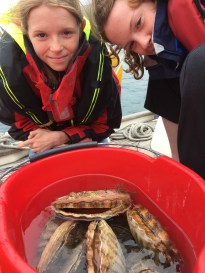
A belated blog from the ‘Mull crew’ about our mini tour – from Corpach, to Port Harris at  Lismore Island (where some delicious scallops were dived for by Robin with assistance from Karen and Veyatie! enjoyed later for supper) 38120029_672284506483661_8354109469763829760_n  https://youtu.be/2OLK1tg0yI4

and then on to Tobermory. We tied up  at the pontoon there – a handy base for shops and of course MaGochans Pub macgochans-tobermory.co.uk ! A nice friendly place for a drink with some live music. We enjoyed a lovely forest walk to the other end of Tobermory Bay the following day, before heading off for a favourite anchorage at Drum na Buidhe by the entrance to Loch Sunart. A gorgeous evening with otter playing in the shore waters a highlight. The next morning some went ashore for a walk up to the headland following the track to Kippin – well worth the hunt through bracken to find the path! Karen and John had a mini adventure in the dinghy to find a phone signal before heading ashore also. Then off to Oban and the marina at Kerrera Island where we sadly said goodbye to Karen. We had a little explore of Kerrara, walking up to Hutcheson’s monument and round to a beach where a seal colony can be seen. The wind was against our planned circuit of Mull, so our travels  took us next back to Port Harris  and from there to Loch Spelvie – a tricky entrance to be done with a fast running tide – where we spent another beautiful evening watching wildlife (another otter and many seabirds fishing) and Robin and the girls went ashore for a swim. Our last day’s sailing came around too quickly, as we headed back to Oban, where we met new crew Stuart and Fraser the following day and bid sad farewell to Svalen and Skip! See below for the blog of their first few days adventuring.  A fantastic week.  Tanera Robin, Veyatie and Pollaidh.


Skipper´s update from the Island of Gigha, Argyll, Scotland

We lost our lovely family crew in Oban on Saturday last week, but were joined by Stuart Black and Fraser Greive from Inverness simultaneously. We came here on Sunday after spending a night and a morning in Ardfern (to do the laundry and avoid strong winds that caused four lifeboat call-outs that night in the Oban area!). However, we have not been able to leave again yet due to strong south winds related to a series of depressions rolling in from the Atlantic and proceeding northwards up the west coast of Scotland.

When we arrived in Ardminish bay, Maggs Mcsporran was on the pier to greet us. She lives on the island, and has like her uncle been involved in the Gigha Community Trust that did the Community land buy-out, bought three second hand windmills, and generally helped the get more residents, better housing, and some small enterprises started. Now Maggs works for Highlands and Islands Enterprise, and is a good friend of Stuart´s. She took us for a tour yesterday to the north of the Island, and also joined us on board for an evening meal, which was good fun. Tonight we will all go to her home for a meal.

We have also explored a bit, and enjoyed a great lunch at the Boathouse pub and restaurant just by the Pier. They have an excellent local chef, and there is a lot of local produce  including lobsters, scallops and oysters, delivered fresh daily by a small fishing boat. That was thanks to Fraser.

We hope to be able to leave early on Thursday morning with the outgoing tide, and reach Bangor at the mouth of Belfast bay in Ireland about 12 hours later after catching favourable winds.

Stuart and Fraser in the pub, and Maggs, Fraser and Stuart at the north end beach, which has a north and a south sandy beach for bathing. Maggs said it was where the Royals bathed off the royal yacht ht Brittania when doing their annual sail around the north (back in the old days!).

Crew Morten writes on Thursday, 19 July:-


I have been on the boat for four days now and this is my last day. We´ve been sailing through the Canals, Locks and Lochs from Inverness all the way to Corpach which is a suburb to Fort William. Most days the weather has been nice and there has been little to no waves as we sailed. It was Monday and Tuesday which were the longest days of sailing, Wednesday we did no sailing as we had to wait for electrical fixes to the boat. The electrician, Bertie McMinn, was from Mallaig and he had formerly been the Cox in Mallaig Lifeboat. Instead we went on a trainride to Mallaig and Glenfinnan. In Mallaig we ate very good fish and chips at the Steam Inn, which were recommended by Bertie.  We also visited the nice small local heritage museum beside the train station, and found a good deal of interesting local history. There was also a photo of Bertie McMinn when he was in the Lifeboat, and he father, who also served in the Lifeboat, and his one or two other McMinn´s who looked older, and might have included a grandfather.

In Glenfinnan, we saw a monument to the Jacobites as well a a giant viaduct which you may have seen the Hogwarts train riding over in the Harry Potter movies. It was a nice walk from the station and back. While waiting for the train we had a local beer on the veranda of the restaurant – an original rail carriage from the 1950s.

Today we went down Neptunes staircase which consists of seven locks, and then a double lock down into the canal basin at Corpach. This took about three hours in all, including some time waiting for the road and rail bridge at Banavie to open. We also checked the electrical outlets again, and got some Calor Gas at the very helpful West Highland Gas in the industrial estate in Fort William. Indeed they delivered the gas back to the boat at no extra charge, allowing Karen and I to shop and catch the bus home directly to Corpach from Fort William.

The weather moved from sun to cloud, and got cooler at the same time. Since rain was forecast, we put on the cockpit tent to keep everything dry.  However, we have an excellent view of Ben Nevis, Scotlands highest mountain, from the boat.

In order, Clockwise. 1. The Jacobite Memorial at Glenfinnan, 2. The Catholic Church, Glenfinnan (This area was more or less untouched by the reformation, being isolated, and remained predominately Catholic until the 1970s, and maybe still is, although there is no longer a resident Priest here, 3. Svalen at the Corpach sea basin, Scotland’s highest mountain, Ben Nevis, behind. 4. Morten and Karen on Glenfinnan Station 5. A selfie of Morten, Karen and Skip in Corpach.

Skip´s and Skip´s Wife´s Blog, Leaving Inverness

UNADJUSTEDNONRAW_thumb_5a1e

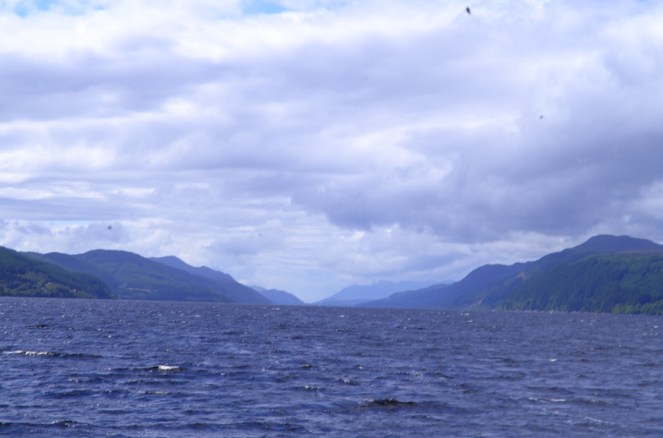
View of Loch Ness looking south west towards Fort AugustusIMG_0230
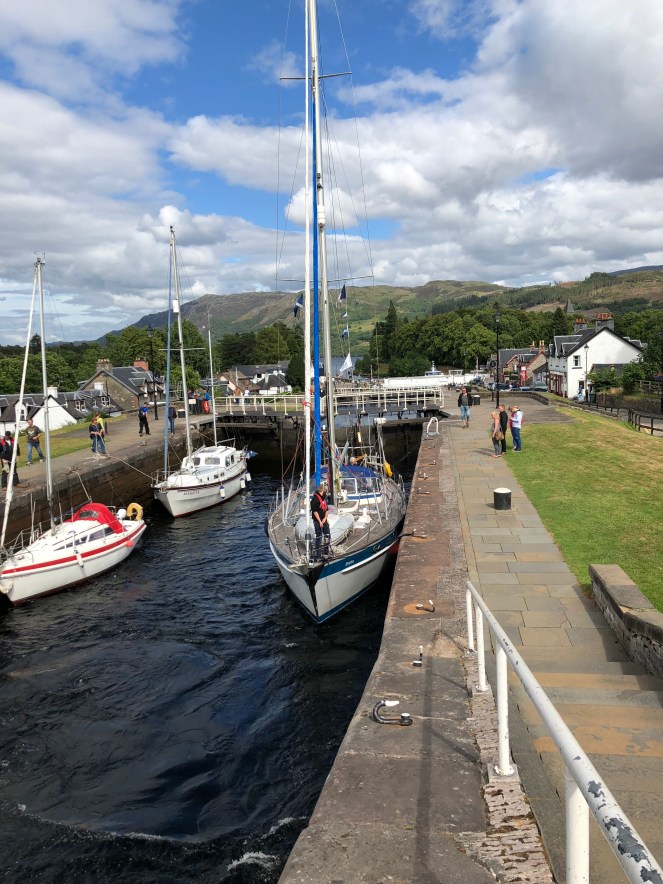
Monday 16 July Up the locks at Fort Augustus
UNADJUSTEDNONRAW_thumb_5a19

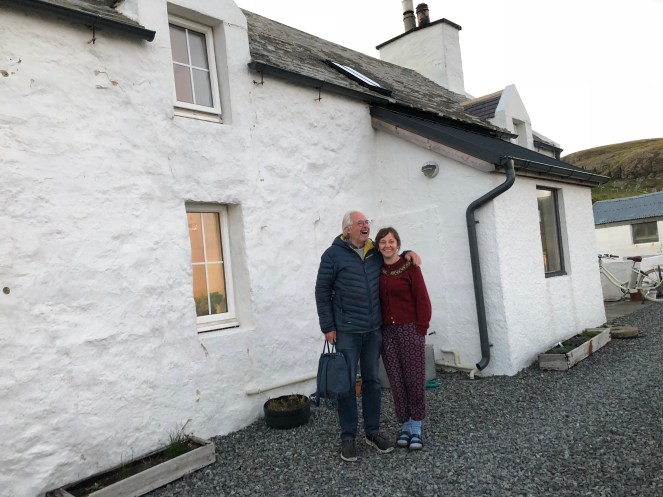
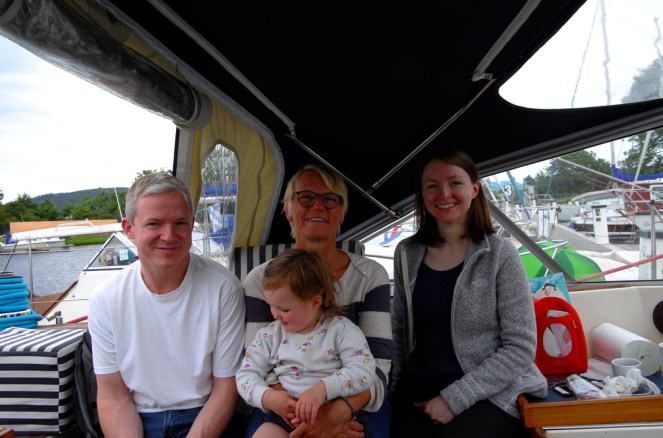
Karen, with Rory, Rosie and Sarah, in Inverness

We spent our time in Inverness mainly in the Seaport Marina, Muirton Basis, in the Caledonian Canal. This canal is a sister canal to the Göta Canal, which, together with the Trollhättan canal and the great Swedish lakes of Väners and Vättern completes the inland waterways between Göteborg and the Baltic. Most importantly, when it was completed in 1832 this waterway enables ships travelling to or from the Baltic Sea to bypass the Øresund and thus avoiding paying the Danish toll.

The Caledonian Canal was completed ten years earlier, in 1822, after 19 years of construction. It links the east and west coasts of Scotland – the North Sea and the Atlantic, and saves a long and usually dangerous voyage around the North of Scotland for fishing boats from the north-east coast, small traders, and pleasure craft.


Skippers wife´s blog:

Inverness is the capital of the Highlands and although experiencing national cuts in subsidies it has a lot of promises for the future. It is the hub for hiking and all sorts of outdoor activities in the highlands. These outdoor activities mixed wirh nice pubs, good crafted beer, great friendly people with a good sense if humour, loads a nice whisky distilleries, golf courses for those interested in that, folk music in the pubs and men in kilts – what more to wish for? Except for a lot of wildlife in mountains, lochs and islands. Inverness can now offer a great museum, a newly opened Harris Tweed shop, the Black Isle bar where one can get crafted beer and stonebaked pizzas, the best folk music pub Hootanannies, Frasers the Butcher and also Fishmonger (in the Victorian Market<9 and Culloden Battlefield where the Scots lost the last battle towards England in 1….


One can cycle along the canal on the tow path all the way to Loch Ness


We had a lot of visitors during our stay! Alasdair with whom we also shopped  dry goods in Wholefoods for many weeks! All organic and healthy stuff. Rory, Sarah and Rosie who liked to explore the interior of the boat. Tanera, Robin and the girls who also brought old gas containers from Aldarion with British fittings! Every country has their own gas fittings which is a pain in the neck, especially as few countries now seem to have gas centres that in the old days filled your own bottle with propane. Certainly this cannot now be done in the UK.


We also visited the upstairs in the Inverness Museum, which was very interesting. Here we saw interesting details and products from a cooperation between craft workers in Iceland and the Highlands and Islands, with interesting fish skin and Harris tweed creations, among others. This is also where the history of the Highlands and Islands since the middle ages is covered, and we found it quite well done.


Skipper continues…

We actually left Muirton basin on Sunday morning, with the first opening of the Muirton bridge. Muirton basin was actually a US naval base during World War I, and a hive of activity, including whisky making at that time.

We climbed through the four locks and, needing some pipe to connect the new hand bilge pump, we paused briefly by Jamie Hogan´s excellent Caley Marina to see if we could get some. Just as we arrived, so did Jamie himself, and we asked him if it was possible to get a piece of plastic hose. The shop was closed, but being an old friend and a nice man, Jamie went off back to get some for us, which he did quickly and efficiently, and without charge.

Onward to Tomnahurich bridge, where we had lunch waiting for the bridge to open.  We moored at the small waiting area beyond the Maid of the Loch pier, where we spent the night comfortably and safely. Here Morten Opsahl joined the crew in the evening, having flown from Norway to Aberdeen and taken the train from there to Inverness, where Stuart Black met him and transported him to the boat.

More coming soon….,
Skippers Blog from Stromness

I just love this place! The small streets and beautiful stone houses,  some with well-kept small walled gardens and shared slipways, the safe harbor (Hamnavoe), the Pier Gallery, friendly people,  connections to Hudson Bay (entrance to which is directly west from here! The reason why many of the explorers of the North West Passage set off from here, including the great Orcadian, Dr John Rae. Here wrote George MacKay Brown, the great Orcadian Poet and Novelist. And last but not least, close enough to bike to the centre of our Stone Age world around Stenness, the Ring of Brodgar (great standing stone circle), the new and massively important site at Ness of Brodgar, the Standing Stones at Stenness, and the chambered cairn at Maeshowe, to name only a few highlights.

On Sunday, Karen and I hired bikes and cycled to Stenness, first visiting the Maes Howe, the chambered cairn with about 12 others and a knowledgeable guide.  It is said to be one of the best preserved in western Europe.

We had not visited this on previous visits to Orkney, and it was a great trip. The cairn is entered through a long, low, stone tunnel which points directly between the two hills on the Island of Hoy, actually the point where the sun sets at the Winter Solstice. This is also a significant alignment for many of the other large structures around Ness of Brodgar, and was most probably a way to welcome, and particularly to encourage, the coming spring with its new life, so often linked to early forms of worship. For more see https://www.historicenvironment.scot/visit-a-place/places/maeshowe-chambered-cairn/

The Vikings were also here much later, sheltering from a snow storm for three days, and made graffiti in the form of runes, which are clearly visible in several places.

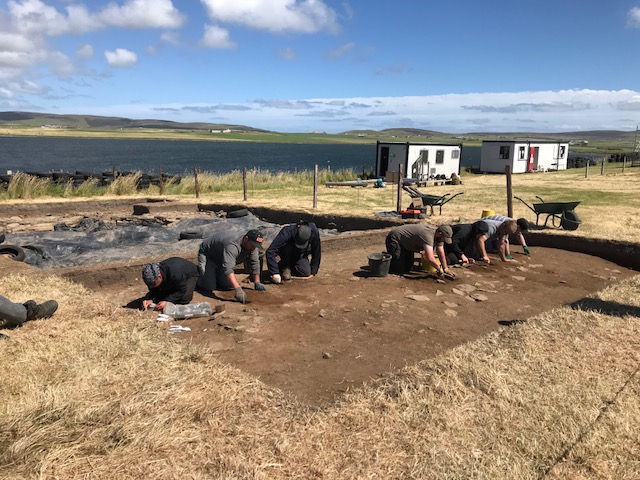
After a picnic lunch by the loch of Harray, we next visited the dig at Ness of Brodgar, where they has so far only scratched the surface of this massive site  that, in the words of the excellent brochure, has “revealed itself as one of the glories of the European Neolithic, the very centre of the ancient world”. We will probably never see this site fully revealed, but what we see is unusually large stone buildings in numerous structures, clustered along this narrow strip of land between two lochs, one of which was and remains joined to the sea, and the other of which is fresh. So far, the oldest buildings date to around 3300BC, or more than 5000 years ago.  Hundreds of large and small clay pots, also decorated and painted, have been found.  Stone art in large quantities, and non-native stones, such as flints, are all here. The size of the structures, and the site, and the discovered of the bones of  400 head of cattle slaughtered at one moment in time (2450BC), suggest that this was an important site of pilgrimage. We also note that Orkney Beef has been highly valued for 4470 plus years!

  1. 5000+ year old stone walls, as they were found, on the dig. One of the large structures. Note also the beautiful paving around.
  2. signpost at the dig
  3. our Archeologist guide, Elaine
  4. Hege`s photo of the dig in action at Ness of Brodgar


See also www.nessofbrodgar.co.uk

www.facebook.com/FriendsNessBrodgar

We cycled back past the Ring of Brodgar, and eventually joining the road from  Birsay to Stromness. And returned home, dropping the bikes and taking a beer to recover in the pub on the pier. Later we enjoyed a lovely meal cooked by Thomas, Hege and the girls – salmon cooked in the oven with ginger, garlic and soy sauce plus olive oil.

Much shopping had been done in our absence. We have six visitors for lunch on Sunday, Tanera, Robin, Veyatie, Pollaidh (John´s daughter, her husband, and grand-daughters) and friends of theirs, so much planning is needed. Tomorrow, we must also plan for the next leg to Inverness, as we will leave with sunrise and tide early on Monday morning (around 0330).


Hege writes from The Orkney Islands

After a brisk sail from Sanday, we arrived in Kirkwall at 15:30. The St. Magnus cathedral was the first to rise from the horizon and I finally thought that this town would take me back to medieval times. Coming from Jarlshof we thought that we had seen it all when it came to the Neolithic remains.

image1

The magnificent Kirkwall Cathedral

Kirkwall reminded me of the Norwegian town of Haugesund, and the streets were full of cruise tourists. We found the laundry easy, but while trying to enter the cathedral we were interrupted by a wedding. Since the museum was still open, we decided to take an overview of the situation. The small museum was literally overflowed with existing objects, but seemed to be in desperate need of new facilities and a curator. What I learned was that I had not nearly finished with the Neolithic culture, and that we would have to hire a car and make some plans for next day. The girls finally had had enough of traditional dinners and made enchiladas and salad for dinner.

Next day we first investigated the Churchill Barriers trying to imagine the drama of the Second World War at Scapa flow. The Italian Chapel proved to be a touching, yet a strange example of war memorial, leaving us with a lot of questions about how life really was for the Italian prisoners of war having to build the barriers for several years under primitive conditions and discipline – since the site strangely enough didn’t say anything about this at all.

The museum at Skara Brae on the other hand had it all! The 4000-year-old houses are impressive in their own right, but the museum managed to take us closer to the people that lived there and even filled in the picture from Jarlshof at Shetland. While leaving we were wondering what made them give up their village after 600 years.IMG_4284

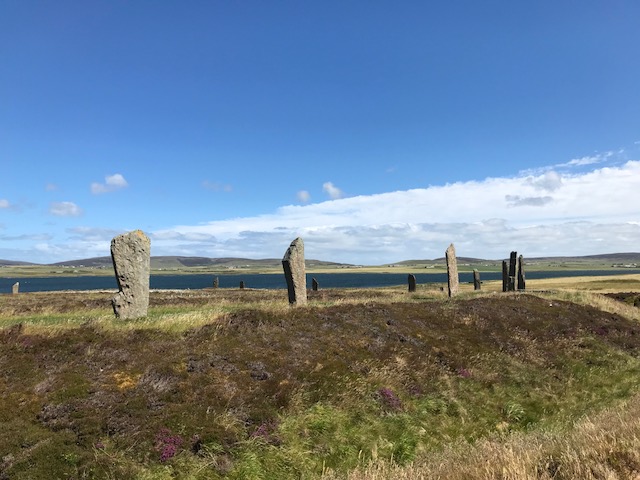
Standing stones, Ring of Brogdar

The ring of Brodgar came next, and there we got two skilled guides for free, sending us in the right directions of the new dig at Ness of Brodgar. The site is being dug right now, and they expect to be able to test their hypotheses that the ring was used for ceremonial purposes supported by a temple and temporary dwellings for people representing different communities at the Orkney Islands. They may even have carved their own sections of the ditch around the ring and brought their own standing stone to represent them at the site.

image2

The Dig in progress at Ness of Brogdar

Exhausted by all the impressions of the day we ended it with Thomas Boeff Bourgignon. The girls then went crazy in Tesco’s dessert department and brought home all sorts of plastic wrapping that John doesn’t agree with, but we all ended up eating something sweet dipped in warm chocolate.

Sailing out of Kirkwall I must acknowledge that I would have to come back to study both the Norse culture and the transition to Scottish role.

image3

Selma waves the Orkney flag!

Skippers notes on Shetland, Fair Isle, Sanday (Orkney Islands)

We cast off from Grutness pier at 0940 and sailed past the Roost at Sumburgh head in slack water. We started off with some good sailing towards Fair Isle, but the wind lightened as we approached Fair Isle, where we moored on the pier behind the Fair Isle Ferry (the Good Shepherd) and a French yacht in North Harbour at 1540. Much activity followed – visits to the Bird Observatory, biking to the small shop for some stores, getting the dinghy out for Thomas and the girls to explore the amazing caves around the harbour, and view the large seals on and near the rocks, cooking and washing, etc etc. Sigrid and Thea Kari have written about the caves and seals on the blog.IMG_7603

Seal and Seagull clip, cave entrance N Harbour, Fair Isle. Credit Selma.

Next morning we set sail for Orkney at 0810 in thick mist, but a nice NW wind arrived off the SW corner of Fair Isle. We have a favourable tide and wind for some hours before it died a bit. We decided to head for Sanday rather than Westray because of the wind speed and direction. At 1620 we dropped anchor in Kettletoft bay, Sunday, and the Thiis family went for a long walk to find one of the many great beaches to swim at. It was very quiet! But a lovely anchorage to stay for the night.

Photos from Kettletoft Bay and around, Sanday. Credit: Hege.

On 4 July we raised anchor at 0855 and set sail for Kirkwall to take advantage of the tidal streams. The nearly mist cleared to a nice sunny day with a good NW wind to take us into Kirkwall bay, tying up at the Marina at 1400.


Innovation across the Islands in the Western Nordic Atlantic

Svalen in Grutness Voe, at pier used by Fairisle ferrySvalen, at Grutness Voe   July 1st 2018

Blog written by Karen

Finally at and now at Grutnessvoe in the South just neighbour to Jarlshof – this amazing historical site showing the remnants in history at Shetland 5000 years back until this millennium . We are now 7 onboard Svalen as Karen arrived after a days delay Thursday with Logan Air – the Scottish Airline – of course with tartan neck protectors.

We feel very welcomed in many ways at these islands in the North. Claire White, who is an old friend and student of Johns, now famous folk musician and journalist for BBC-Scotland, opened the doors for us together with her husband Michael. Lerwick harbour is wide, deep, with not too much tide and for the weekend we are here also hosts the Bergen-Shetland-Bergen sailor race. However, we are not competitors, we just go with  – or against – the wind.

JOhna dn Claire White , Claire and Michaels home, East Quarff.jpg

The kick-off for the grown up women on the boat was  participating in the weekly knitting club in Scalloway with Michael’s mother Barbara and having a local museum tour with his father Robert – with a lot of focus on the Shetland bus and the Norway connections including Jens Stoltenberg opening the museum in 2012. Another visit was to the Shetland Museum being of very high quality – according to our Museum Director on-board! Showing how this great land formerly united with Scandinavia especially Norway now with Great Britain provides a proud 6000 years history since people settled here and now with 23000 inhabitants. For those interested in history – this is less that half of the population at the Faroese Islands today – but in 1839 the population was three times as high on the Shetland Islands than on the Faroese Island according to the Danish Governor, Amtmand Christian Pløyen. Amtmand Pløyen sailen to Pløyen   was   an   open-minded   innovator, and became responsible for reforms which affected nearly all  aspects  of  Faroese  life.  In  pursuing  his  many visions,  one  of  the  most  important  and  spectacular projects that Pløyen organised was a trip to Shetland, Orkney and Scotland in 1839. While    his    fellow    Faroese    were    studying techniques of fishing and fish-curing, Pløyen himself toured  Shetland,  Orkney  and  mainland  Scotland  to search ways of benefiting the Faroes. He liked what he saw, and the trip resulted in the bringing of important developments in conventional fishing to Faroe: first of all the introduction of the long-line with its hundreds of hooks left in the sea. He further ‘popularised the use of Scottish and Shetland seed-potatoes; he introduced the  labour-saving  Shetland  peat-spade,  which  soon superseded   the   native   mode   …   and   encouraged intercourse  not  only  with  Denmark,  but  also  with Shetland  and  Leith’  (John  West).  Pløyen  also  was  aconstant  advocate  of  free  trade,  thereby  rejecting  the existing monopoly trade run from Copenhagen. https://docplayer.net/30473327-Governor-ployen-and-captain-cameron-mouat.html http://historypressfaroeislands.com/images/1/In_the_footsteps.pdf

The book by Pløyen Karen was introduced to The Faroes a month ago and found in the bookstore in Thorshavn. It then turned out that Robert (the museum curator in Scalloway, and Michaels father) had this book in English published in 1899. https://www.abebooks.co.uk/servlet/BookDetailsPL?bi=14296875470&searchurl=tn%3Dreminiscences%2Bof%2Ba%2Bvoyage%2Bto%2Bshetland%2Borkney%2Band%2Bscotland%26sortby%3D20%26an%3Dployen%2Bchristian&cm_sp=snippet-_-srp1-_-title1

Innovation also happens in 2018 in knitting across out nations! Hege, Marianne (who Karen met on the plane to the Shetland, and who was a keen knitter, running the Facebook site «Strikk») and Karen exchanged knitting ideas, how to cast on and off, as well as patterns with the Scalloway knitting club. The cast created and taught by Barbara Johnson you can see at the video. This makes a stronger and more elastic edge to the sweaters.

So of course, Hege and Karen, had to get on with new knitting ideas the following day at both Jameson as well as at Jameson and Smith – and so so they went back to the boat with shetland wool, patterns and new ideas to bring back to Scandinavia.

BronzeAge wheelhouses at Jarlshof, Shetland

Saturday, June 30th we left Lerwick heading South towards Jarlshof!  The sail was in full sun, with views to Brochs, to sheep, to high cliffs and with a good wind in between, but also a bit annoying small waves. But arriving to Gruetness Voe made the whole difference! A jewel of a little pier beside the harbour and beside Jarlshof surrounded by seals (at least partly), ponies, stonewalls, kittiwakes, terns, Shetland sparrows, starlings and an inviting hill to climb – in full sun – it could not be more perfect. We could delve into more than 4,000 years of human settlement in the same location. Neolithic people first settled at this site in Shetland around 2700 BC, and it remained in use until the AD 1600s.Discoveries made here include oval-shaped Bronze Age houses, an Iron Age broch and wheelhouses, Norse long houses, a medieval farmstead, and a laird’s house dating from the 1500s.

Some climbed the hill, some investigated the white sandy beaches, some cooked with Danish potatoes and Scottish smoked haddock, and some went out on the dinghy – and so we slept a long night and decided to have a resting Sunday waiting for the right wind to the Fair Isle on Monday 2nd!